“Almost everything will work again if you unplug it for a few minutes, including you.” – Anne Lamott
Why Modern Professionals Are More Stressed Than Ever
The modern workplace has transformed dramatically over the past decade. Technology has made communication faster, but it has also blurred the boundaries between professional and personal life. Emails arrive late at night, notifications never stop, and many employees spend eight to twelve hours glued to a screen. What was once considered a normal workday has gradually evolved into a lifestyle where constant availability is expected. As a result, stress has become one of the most common challenges faced by professionals, entrepreneurs, students, and homemakers alike. Recent reports indicate that workplace burnout and chronic stress continue to affect a significant portion of the global workforce.
The physical consequences of this stress are often visible. Tight shoulders, stiff neck muscles, recurring headaches, lower back pain, eye strain, and fatigue have become common complaints among office workers. The emotional effects can be even more damaging. Anxiety, irritability, lack of concentration, sleep disturbances, and emotional exhaustion slowly reduce quality of life. Imagine your mind as a browser with fifty tabs open simultaneously. Eventually, everything starts slowing down. That is exactly what prolonged stress does to your body and brain. The good news is that yoga for stress relief offers a practical and sustainable solution. Unlike temporary distractions, yoga addresses the root causes of stress by calming the nervous system, improving breathing patterns, and restoring balance to the body.
Understanding the Connection Between Yoga and Stress Relief
Yoga is much more than stretching or performing physical postures. It is a holistic practice that combines movement, breathing, mindfulness, and relaxation techniques. When practiced consistently, yoga creates harmony between the mind and body. This balance becomes particularly valuable after long working hours when mental fatigue and physical tension accumulate throughout the day.
Scientific research supports what yogis have known for centuries. Studies on workplace yoga interventions have shown significant reductions in perceived stress among employees who practiced yoga regularly. Researchers found that yoga helps activate the parasympathetic nervous system, often referred to as the body’s “rest and digest” mode. This is the opposite of the stress-driven “fight or flight” response that many professionals experience daily.
Think of your nervous system like a car engine. Stress keeps the accelerator pressed down continuously, causing wear and tear over time. Yoga acts like the brake pedal, allowing the system to slow down, recover, and function efficiently. Controlled breathing exercises lower stress hormones, improve oxygen circulation, and help regulate heart rate. Combined with mindful movement, these practices create a powerful antidote to workplace stress. This is one reason why corporate wellness programs worldwide increasingly incorporate yoga sessions for employee well-being.
Signs That Work Stress Is Affecting Your Well-Being
Many people live with chronic stress for years without realizing how deeply it affects their health. Stress does not always announce itself dramatically. Sometimes it appears through subtle symptoms that gradually become part of daily life. Recognizing these signs is the first step toward creating positive change.
Physical Symptoms
| Symptom | Common Cause |
|---|---|
| Neck and shoulder pain | Long hours at a desk |
| Lower back discomfort | Poor posture |
| Frequent headaches | Mental tension |
| Fatigue | Chronic stress |
| Sleep problems | Elevated cortisol levels |
| Digestive issues | Stress response activation |
Emotional and Mental Symptoms
Stress can also manifest emotionally. You may feel overwhelmed by simple tasks, become more irritable than usual, or struggle to concentrate during meetings. Creativity often declines, decision-making becomes difficult, and motivation starts to disappear. Over time, these symptoms can negatively affect professional performance and personal relationships.
Many professionals assume they need a vacation to feel better. While breaks are helpful, lasting relief often comes from daily wellness practices. Yoga provides a structured way to release accumulated stress before it develops into burnout. Regular practice helps you reconnect with your body, observe your thoughts without judgment, and create mental space amidst a busy schedule.
Benefits of Practicing Yoga After Long Working Hours
One of the greatest advantages of yoga is its versatility. Whether you are a beginner or an experienced practitioner, yoga can be adapted to your needs and fitness level. Practicing yoga after work offers immediate relief and long-term health benefits.
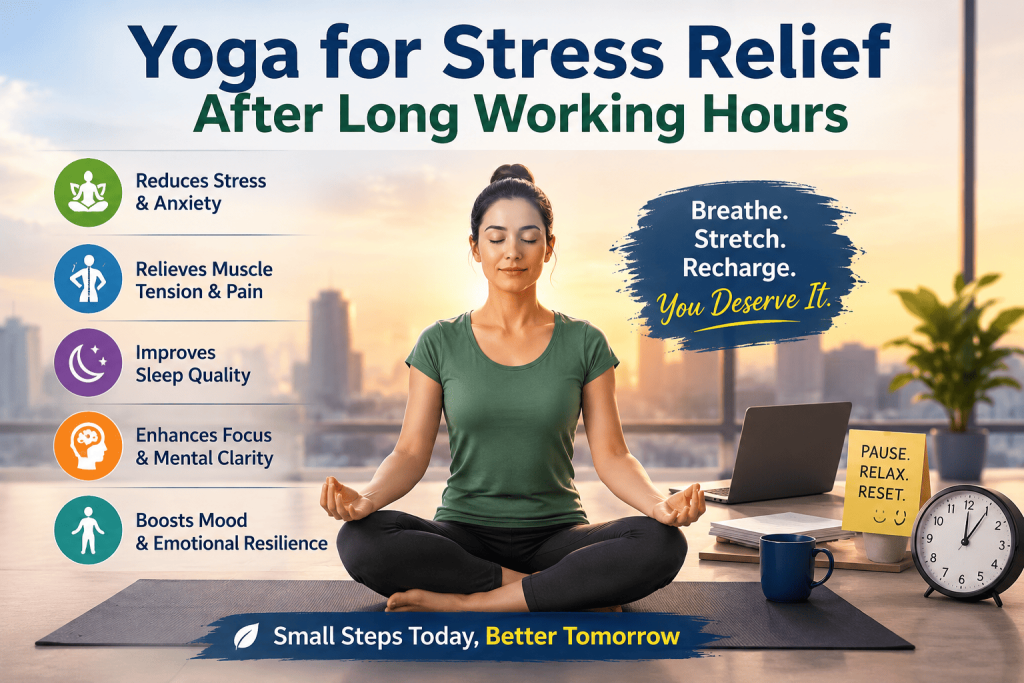
A major benefit is improved sleep quality. Stress often keeps the mind active long after the workday ends. Many professionals find themselves replaying conversations, worrying about deadlines, or mentally preparing for the next day. Gentle evening yoga helps calm mental chatter and prepares the body for restorative sleep. Recent wellness reports also highlight evening yoga as particularly effective for stress reduction and relaxation after work.
Another significant benefit is pain relief. Sitting for extended periods shortens hip flexors, weakens the core, and creates muscular imbalances. Yoga stretches and strengthens key muscle groups while improving posture. Individuals who regularly practice yoga often report reduced back pain, fewer tension headaches, and greater flexibility. Beyond physical improvements, yoga enhances emotional resilience. Instead of reacting impulsively to stressful situations, practitioners develop greater awareness and emotional control. This translates into improved focus, better communication, and increased productivity both at work and at home.
Best Yoga Poses for Stress Relief After Work
Certain yoga postures are particularly effective for relieving stress accumulated during long working hours. These poses focus on releasing muscular tension while encouraging deep relaxation.
Child’s Pose (Balasana)
Child’s Pose is one of the most restorative yoga postures. It gently stretches the lower back, hips, and shoulders while encouraging slow, mindful breathing. The folded position naturally promotes introspection and relaxation. Many yoga teachers recommend beginning and ending a practice with Balasana because it creates an immediate sense of calm. This pose is especially beneficial for professionals who experience lower back discomfort after prolonged sitting.
Cat-Cow Stretch
The Cat-Cow sequence improves spinal mobility and reduces stiffness caused by desk work. The gentle movement between spinal flexion and extension increases circulation throughout the back while releasing tension in the neck and shoulders. It also encourages synchronization between breath and movement, helping practitioners transition from a stressful mindset into a more relaxed state.
Legs-Up-The-Wall Pose (Viparita Karani)
This simple yet powerful pose involves lying on your back with your legs extended vertically against a wall. It helps improve circulation, reduce swelling in the legs, and calm the nervous system. Many practitioners describe Viparita Karani as one of the quickest ways to relieve mental fatigue after a demanding workday. Experts frequently recommend this posture for relaxation and improved sleep quality.
Corpse Pose (Savasana)
Although it appears easy, Savasana is one of yoga’s most transformative practices. Lying completely still while maintaining awareness allows the body to absorb the benefits of the session. During Savasana, heart rate slows, breathing becomes deeper, and the mind enters a state of profound relaxation. It is often described as a reset button for the nervous system.
Breathing Techniques to Instantly Reduce Stress
Breathing is one of the few bodily functions that can operate automatically or consciously. This makes breathwork an incredibly effective tool for stress management. When stress levels rise, breathing becomes shallow and rapid. Conscious breathing reverses this pattern and signals safety to the brain.
Deep Belly Breathing
Deep belly breathing involves inhaling slowly through the nose while expanding the abdomen. The exhalation is equally slow and controlled. This technique encourages full oxygen exchange and reduces activation of the stress response. Practicing for just five minutes can significantly improve relaxation and mental clarity.
Alternate Nostril Breathing (Nadi Shodhana)
Alternate Nostril Breathing is a traditional yogic technique that balances the nervous system. By alternating airflow between nostrils, practitioners create a sense of mental equilibrium and focus. Many people use this practice before bedtime or after a stressful meeting because it promotes emotional stability and concentration.
Regular pranayama practice complements physical yoga postures beautifully. Together, they create a comprehensive stress-management system that can be practiced almost anywhere.
Creating an Evening Yoga Routine for Busy Professionals
Consistency matters more than duration. A simple twenty-minute routine performed regularly can produce greater benefits than occasional long sessions. Busy professionals often assume they lack time for self-care, but yoga does not require hours of commitment.
A practical evening sequence might include:
- Deep breathing – 3 minutes
- Cat-Cow Stretch – 3 minutes
- Child’s Pose – 3 minutes
- Gentle seated twists – 3 minutes
- Legs-Up-The-Wall Pose – 5 minutes
- Savasana – 3 minutes
This sequence addresses common workplace issues such as spinal stiffness, poor posture, mental fatigue, and elevated stress levels. Performed consistently, it becomes a transition ritual between work responsibilities and personal life. Instead of carrying office stress into the evening, practitioners create a clear boundary that supports relaxation and recovery.
Why Join a Professional Yoga Class in Kolkata
While home practice offers flexibility, learning from a certified yoga teacher can dramatically improve results. Proper alignment, personalized guidance, and structured progression help students practice safely and effectively. For beginners especially, professional instruction builds confidence and ensures that techniques are performed correctly.
If you are searching for a yoga class in Kolkata, a yoga class in Kankurgachi, a yoga class near Manicktala, or a yoga class near Ultadanga, joining a dedicated yoga studio can provide the accountability and support needed to maintain a consistent practice. Working with an experienced yoga teacher allows students to address specific concerns such as stress management, posture correction, flexibility, weight management, and overall wellness.
Yoga With Sandy has become a trusted name among individuals looking to improve physical and mental well-being through authentic yoga practices. Whether you are seeking stress relief after long working hours, better flexibility, improved sleep, or a healthier lifestyle, professional guidance can make the journey more effective and enjoyable. Many people searching for a yoga class near you discover that practicing within a supportive community significantly increases motivation and long-term commitment.
Conclusion
Work-related stress has become an unavoidable part of modern life, but suffering from it does not have to be. Yoga offers a practical, science-backed approach to restoring balance after long working hours. Through mindful movement, controlled breathing, and relaxation techniques, yoga helps reduce physical tension, calm the nervous system, improve sleep quality, and enhance emotional resilience. Research consistently shows that workplace yoga interventions reduce perceived stress and support overall well-being.
Whether you practice at home or join a professional yoga class in Kolkata, the key is consistency. Even twenty minutes a day can create meaningful improvements in your physical health, mental clarity, and quality of life. Your body works hard for you every day. Yoga is one of the best ways to give it the care and recovery it deserves.
Frequently Asked Questions
1. Is yoga effective for reducing work-related stress?
Yes. Multiple studies have shown that regular yoga practice can significantly reduce perceived workplace stress while improving overall mental well-being.
2. What is the best time to practice yoga for stress relief?
Evening yoga is particularly effective after long working hours because it helps release accumulated tension and prepares the body for restful sleep.
3. How long should I practice yoga each day?
A daily practice of 20–30 minutes is sufficient for most people to experience noticeable benefits in stress management and flexibility.
4. Which yoga pose is best for immediate relaxation?
Child’s Pose, Legs-Up-The-Wall Pose, and Savasana are among the most effective poses for immediate relaxation and nervous system recovery.
5. Can beginners join a yoga class in Kankurgachi or Kolkata?
Absolutely. Most professional yoga studios, including Yoga With Sandy, offer beginner-friendly programs guided by a certified yoga teacher to ensure safe and effective learning.
