Yoga has transformed from a traditional wellness practice into a modern lifestyle movement. Across India, more people are searching for terms like “yoga class near you,” “best yoga studio,” “online yoga classes,” and “yoga class in Kolkata.” The question many beginners ask before starting their journey is simple: should you practice yoga at home or join a professional studio? At first glance, home yoga seems convenient and affordable, while studio yoga appears structured and professional. But the real answer depends on your body, goals, discipline, lifestyle, and learning preferences.
The yoga industry itself is growing rapidly. According to recent industry reports, the India yoga market was valued at approximately USD 5.06 billion in 2025 and is projected to reach USD 11 billion by 2033, showing massive growth in both online and offline yoga participation. Offline yoga classes still dominate the market with over 73% share, proving that people continue to value in-person instruction despite the growth of online platforms.
At the same time, online yoga participation is exploding because modern lifestyles are busier than ever. Remote work, long commuting hours, stress, anxiety, posture-related pain, and screen fatigue are pushing people toward accessible wellness solutions. That is why both home yoga and studio yoga are thriving together instead of competing against each other. Think of yoga like learning music. Some people successfully learn through YouTube videos at home, while others progress faster under a trained instructor in a structured environment. Yoga works similarly.
If you are considering joining a yoga class in Kankurgachi, exploring a yoga studio, or beginning with home practice, understanding the strengths and weaknesses of both approaches will help you make the right decision for your body and lifestyle.
Why More People Are Starting Yoga in 2026
The popularity of yoga is no longer limited to fitness enthusiasts. Office workers, students, homemakers, athletes, senior citizens, and even teenagers are turning toward yoga because modern life is exhausting both physically and mentally. Studies and market reports show that rising stress levels, lifestyle disorders, and posture-related problems are major reasons behind yoga adoption.
Another important trend is the shift from traditional gym culture toward “mind-body fitness.” People no longer want only six-pack abs or intense cardio sessions. They want sustainable health, emotional balance, better sleep, flexibility, improved breathing, and reduced stress. Yoga provides all these benefits simultaneously. This is one reason searches for “yoga class near you” and “best yoga studio in Kolkata” continue to rise.
Online yoga also became highly normalized after the pandemic years. Millions of people discovered that they could practice yoga from their bedrooms, living rooms, or terraces. Reports show that digital yoga participation in India has grown dramatically due to smartphone penetration and affordable internet access. Yet despite this digital growth, many practitioners still prefer offline learning because of the accountability and personal correction instructors provide.
Interestingly, the biggest growth group includes working adults aged 30–50. These individuals often suffer from neck pain, lower back stiffness, weight gain, poor posture, stress, and sleep problems caused by sedentary lifestyles. Yoga is increasingly viewed as preventive healthcare rather than just exercise. It is becoming part of daily wellness routines similar to brushing teeth or drinking water.
This shift explains why local yoga communities are expanding rapidly in cities like Kolkata. Whether someone wants weight management, stress relief, flexibility, meditation, or therapeutic yoga, structured guidance matters more than ever. That is why many beginners eventually explore professional centers such as Yoga with Sandy, especially when they want personalized attention and sustainable results.
Understanding Home Yoga Practice
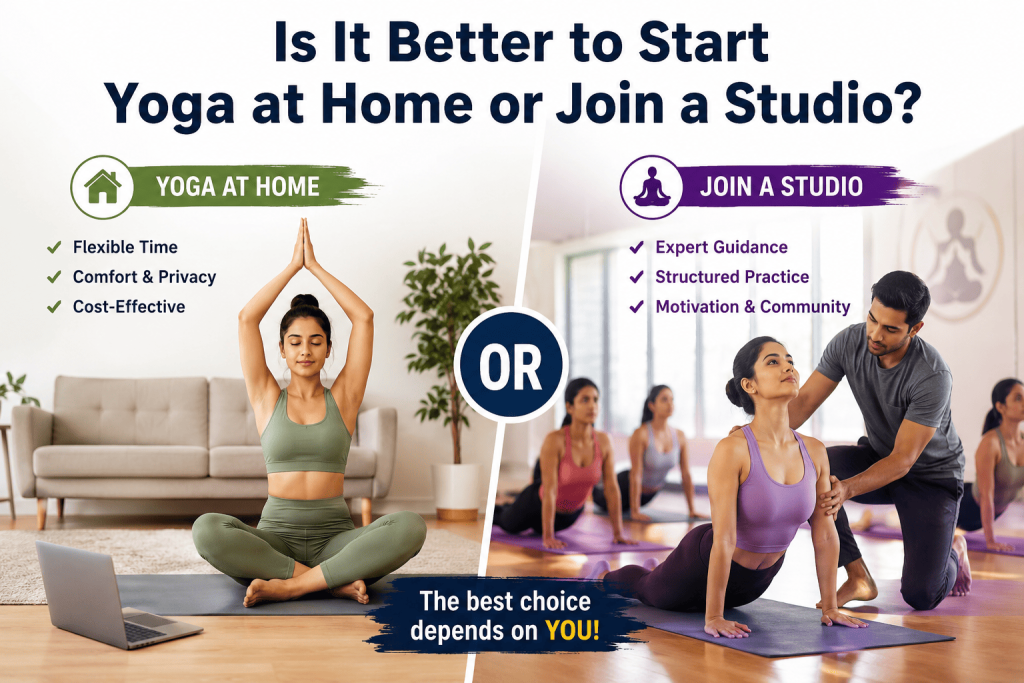
Home yoga sounds appealing because it removes many barriers. You do not need to travel, follow fixed schedules, or spend large amounts of money. You can wake up, roll out a mat, and begin immediately. For busy professionals, parents, or introverts, this flexibility feels liberating.
One of the biggest advantages of home yoga is convenience. You can practice anytime-early morning before work, late evening after dinner, or even during lunch breaks. There is no commuting stress, no parking issues, and no pressure to keep up with others in class. Home practice also allows people to explore yoga privately without feeling self-conscious. Beginners who are nervous about flexibility or body image often feel more comfortable starting alone.
Financially, home yoga can also be attractive. Free YouTube tutorials, affordable subscription apps, and online programs make yoga accessible to almost everyone. This is particularly useful for students or people testing whether yoga suits them before investing in studio memberships.
Still, home yoga has serious limitations that many beginners underestimate. Learning yoga through screens is similar to learning driving theory without an instructor sitting beside you. You may understand the concept, but your posture, breathing, alignment, and execution could still be incorrect. Small mistakes repeated daily can gradually create discomfort or injuries.
Another major challenge is consistency. Motivation feels strong during the first week, but distractions quickly appear at home. Notifications, family interruptions, laziness, workload, or lack of accountability often reduce discipline. Many people buy yoga mats with enthusiasm only to stop practicing within a month. Without structure, progress becomes inconsistent.
Safety is another concern. Beginners frequently force flexibility, imitate advanced poses, or ignore physical limitations. Professional teachers can immediately identify dangerous alignment issues, but online videos cannot. This becomes especially risky for people with obesity, back pain, cervical problems, arthritis, or medical conditions.
That said, home yoga works extremely well for self-disciplined individuals who already understand the basics or those combining online practice with occasional instructor guidance. Many advanced practitioners eventually build strong home routines after learning fundamentals from a studio.
Understanding Studio Yoga Classes
Joining a professional yoga studio creates a completely different experience. Instead of navigating yoga alone, students receive guidance, correction, structure, and motivation from trained instructors. For beginners, this often accelerates progress dramatically.
One of the greatest benefits of studio yoga is expert supervision. A qualified instructor can observe your posture, breathing patterns, flexibility limits, balance, and movement quality in real time. This prevents injuries while improving technique. Small corrections-like adjusting spine alignment or breathing rhythm-can completely transform the effectiveness of a posture.
Studio environments also create psychological commitment. When you enroll in a yoga class in Kolkata or a yoga class in Kankurgachi, you are more likely to follow a routine because there is accountability. Humans naturally perform better within communities. Watching others practice consistently becomes motivating, especially on difficult days when energy feels low.
Another advantage is structured progression. Good yoga studios design beginner-friendly sequences instead of randomly teaching advanced poses. This helps students gradually improve flexibility, mobility, stamina, breathing control, and confidence. Specialized classes like therapeutic yoga, prenatal yoga, meditation, power yoga, and Ashtanga yoga also become accessible through professional centers.
The emotional benefits are equally important. Many practitioners describe yoga studios as calming spaces where stress dissolves the moment they enter. The atmosphere, teacher support, collective energy, and mindful environment create a sense of belonging that home practice sometimes lacks.
Still, studio yoga is not perfect. Cost is the biggest limitation. Community discussions online frequently mention rising studio prices and membership fees. Busy professionals may also struggle with fixed schedules or travel time. Some beginners feel intimidated practicing around experienced students.
This is why choosing the right instructor matters enormously. A welcoming, beginner-friendly studio can make yoga enjoyable, while an overly competitive environment may discourage newcomers.
