“Your body whispers before it screams. Neck stiffness and tight shoulders are often the first warning signs of a lifestyle that needs balance.”
Modern work culture has quietly turned millions of people into full-time sitters. Whether you work in IT, marketing, finance, customer support, design, or even run your own business, chances are your neck and shoulders carry the weight of your daily stress. Long hours staring at laptops, poor posture, endless scrolling on phones, and back-to-back meetings are creating a silent epidemic of stiffness, tension, and chronic discomfort. Across India, especially in urban cities like Kolkata, more professionals are searching for natural ways to reduce body pain without relying entirely on medication.
Recent research shows that neck and shoulder pain is extremely common among office workers. A study on desk workers found that one-year prevalence of work-related neck pain reached 28.3%, with posture and prolonged computer use being major contributors. Another clinical trial involving sedentary office workers showed that Hatha Yoga significantly reduced pain, anxiety, stiffness, and neck dysfunction, while also improving flexibility and quality of life.
This is exactly why yoga has become one of the most searched wellness practices globally. Unlike quick pain-relief hacks, yoga addresses the root cause – posture imbalance, muscular weakness, stress accumulation, restricted breathing, and nervous system fatigue. At Yoga With Sandy, many students joining a yoga class in Kankurgachi or a yoga class in Kolkata often come with complaints like stiff necks, rounded shoulders, headaches, upper back tension, and reduced mobility. What surprises them most is how quickly consistent yoga practice begins restoring comfort and movement.
Why Desk Workers Commonly Experience Neck and Shoulder Pain
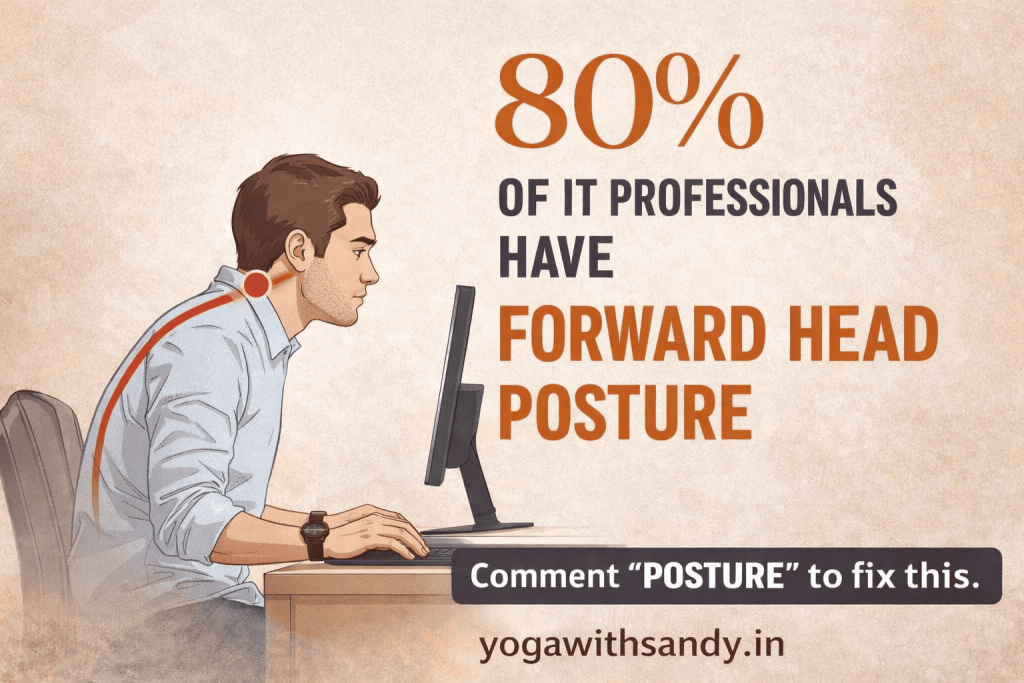
If you think your neck pain is caused by a single bad sitting position, think again. The real issue develops gradually over months and sometimes years. Most desk workers spend anywhere between 7 to 10 hours daily in front of screens. During that time, the head slowly moves forward, shoulders round inward, and the upper back collapses. The body adapts to this unhealthy alignment until discomfort becomes constant. Research has consistently shown that prolonged sitting and poor workstation setup are major contributors to musculoskeletal pain among office workers.
The human head weighs roughly 4 to 5 kilograms. When your neck tilts forward repeatedly while using laptops or smartphones, the pressure on cervical muscles dramatically increases. Imagine carrying a bowling ball slightly ahead of your body all day long. Your neck muscles are forced into overwork, and eventually they begin tightening as a protective response. That tightness spreads into the shoulders, traps, jaw, and upper back. This is why many professionals feel stiffness even after waking up in the morning.
Stress also plays a massive role. Emotional tension gets stored physically inside the body. Many people unconsciously lift their shoulders upward during stressful meetings or deadlines. Over time, this creates chronic muscular guarding. According to experts discussing yoga for neck relief, mindful movement combined with deep breathing helps calm the nervous system while releasing stress-induced muscular tension.
In busy metropolitan areas like Kolkata, sedentary lifestyles are increasing rapidly. Corporate professionals, students, entrepreneurs, and remote workers are all experiencing similar symptoms. This explains why searches for terms like best yoga classes near me, yoga for neck pain, yoga for posture correction, and yoga class in Kolkata continue rising across Google trends and wellness platforms.
Why Yoga Works Better Than Temporary Pain Relief
Most people initially treat neck and shoulder pain with painkillers, massage guns, heating pads, or quick stretches. While these methods may offer temporary comfort, they rarely solve the deeper biomechanical problem. Yoga works differently because it improves mobility, posture awareness, muscular balance, breathing patterns, and stress regulation simultaneously.
One of the biggest reasons yoga is effective is because it retrains the body instead of simply masking symptoms. Research involving sedentary office workers found that yoga improved flexibility, reduced pain intensity, decreased anxiety levels, and enhanced overall neck function. Strengthening and stretching together create a more sustainable recovery process than passive therapies alone.
Yoga also activates the parasympathetic nervous system, often called the “rest and repair” system. When stress levels remain high, the body stays stuck in fight-or-flight mode. Muscles tighten automatically, breathing becomes shallow, and inflammation increases. Slow yoga sequences combined with conscious breathing signal safety to the nervous system, allowing tight muscles to relax naturally. This is why many people feel emotionally lighter after a yoga session, not just physically looser.
Breathing techniques are especially important. Many desk workers breathe shallowly from the chest throughout the day. This keeps the shoulders constantly elevated. Yogic breathing encourages diaphragmatic expansion, helping release unnecessary tension from the upper body. Practices such as deep belly breathing, Anulom Vilom, and gentle pranayama can significantly reduce stress-driven tightness.
At Yoga With Sandy, students often notice that regular yoga sessions improve more than pain levels. They sleep better, feel mentally calmer, experience fewer headaches, and gain better posture confidence. A structured yoga class in Kankurgachi can become more than a fitness routine – it becomes a long-term posture correction and stress management system.
Common Symptoms That Should Not Be Ignored
Many people wait until pain becomes severe before taking action. The problem is that chronic neck and shoulder issues usually begin with subtle warning signs. Ignoring these symptoms allows muscular imbalance and joint stiffness to worsen gradually.
Common early symptoms include:
- Morning neck stiffness
- Tight shoulders after laptop work
- Frequent headaches near the temples
- Reduced neck mobility
- Burning sensation between shoulder blades
- Tingling or heaviness in the arms
- Clicking sounds during neck movement
- Poor posture while sitting
According to workplace pain studies, poor posture, lack of movement breaks, and improper monitor height significantly increase neck strain. Many remote workers also report increased discomfort because home setups often lack ergonomic support.
There are situations where professional medical evaluation becomes necessary. If neck pain includes numbness, shooting pain into the arms, severe weakness, dizziness, or persistent migraines, it should not be treated casually. A spine specialist discussing desk-job posture issues warned that chronic forward-head posture can eventually contribute to disc problems and nerve compression if ignored for too long.
Yoga is extremely supportive for non-specific muscular pain and posture-related discomfort, but it should always be practiced intelligently. Gentle progression matters more than aggressive stretching. One mistake many beginners make is forcing mobility before building stability. The goal is not to twist the neck aggressively but to create balanced movement and strength.
Best Yoga Poses for Neck and Shoulder Pain
Cat-Cow Pose
Cat-Cow Pose may look simple, but it is one of the most effective spinal mobility exercises for desk workers. The movement gently alternates between spinal flexion and extension, helping release stiffness trapped in the neck, shoulders, and upper back. When performed slowly with synchronized breathing, this pose improves circulation around the cervical spine while restoring mobility lost from prolonged sitting.
Desk workers usually develop rigid thoracic spines because they remain hunched forward throughout the day. Cat-Cow reverses that pattern by encouraging spinal articulation. During Cow Pose, the chest opens and shoulder blades retract slightly, reducing the rounded-shoulder posture associated with computer use. During Cat Pose, the upper back stretches deeply, releasing tension around the traps and shoulder girdle.
Breath coordination is crucial here. Inhaling while expanding the chest and exhaling while rounding the spine creates nervous system relaxation alongside mobility improvement. Many yoga therapists recommend this pose as part of morning mobility routines because it gently wakes up the spine without excessive strain.
Thread the Needle Pose
Thread the Needle is particularly effective for upper back stiffness and shoulder tightness. Desk workers often feel knots between their shoulder blades because the thoracic spine becomes immobile after long sitting sessions. This pose creates rotational mobility while stretching the posterior shoulder muscles.
The twisting action also encourages fascial release around the upper back. Many practitioners notice immediate relief after holding the pose for several breaths. Unlike aggressive stretches, Thread the Needle allows the body to relax gradually into rotation. It combines mobility, decompression, and relaxation all at once.
Experts discussing yoga for desk-related tension frequently mention this pose because it targets the exact areas affected by laptop posture. When practiced consistently, it can help improve posture awareness and shoulder mobility significantly.
Child’s Pose
Child’s Pose is one of the most therapeutic resting postures in yoga. It gently lengthens the spine while calming the nervous system. Many people underestimate its effectiveness because it appears passive, but the pose creates deep decompression across the back body.
For desk workers, Child’s Pose counteracts spinal compression caused by prolonged sitting. Extending the arms forward increases shoulder opening while encouraging the upper back to relax. Slow breathing in this position can reduce muscular guarding caused by stress and anxiety.
This pose is also psychologically restorative. Many professionals live in a constant state of mental stimulation. Child’s Pose acts like a nervous system reset button. It encourages inward focus, slower breathing, and emotional grounding. Practicing it even for two minutes during a workday can noticeably reduce accumulated tension.
Cobra Pose
Cobra Pose directly opposes the slouched posture common among desk workers. It strengthens spinal muscles, opens the chest, and stretches the front body. Since prolonged sitting weakens the posterior chain, backbends like Cobra are essential for restoring structural balance.
One important aspect of Cobra Pose is controlled engagement. The movement should come from spinal extension rather than forcing the lower back aggressively. Gentle lifting combined with shoulder relaxation creates the best therapeutic effect.
Research on office-worker exercise programs consistently shows that strengthening exercises improve neck pain and posture quality. Cobra contributes to this by activating postural muscles that often become weak from sedentary habits.
Eagle Arms Stretch
Eagle Arms is excellent for releasing tight shoulders and upper traps. Wrapping the arms stretches muscles between the shoulder blades that rarely receive adequate movement during desk work. Many people feel an instant opening sensation in the upper back when performing this stretch correctly.
This pose also improves shoulder joint mobility and posture awareness. Since emotional stress often accumulates in the shoulders, slow breathing during Eagle Arms creates both physical and emotional release. It is especially helpful after long meetings or intense screen time.
The Role of Breathing Techniques in Pain Relief
Most people never realize how closely breathing and muscular tension are connected. Stress changes breathing patterns almost immediately. When anxious or overwhelmed, breathing becomes shallow and chest-dominant. This forces accessory breathing muscles around the neck and shoulders to overwork continuously.
One effective technique is simple belly breathing:
- Sit comfortably with a straight spine.
- Place one hand on the chest and another on the abdomen.
- Inhale slowly through the nose, expanding the belly.
- Exhale gently and completely.
- Repeat for 5 minutes.
This practice improves oxygenation, reduces mental fatigue, and encourages postural relaxation. Many students attending a yoga class in Kolkata discover that breathing alone can dramatically influence how their body feels throughout the day.
Desk Yoga for Busy Professionals
One major misconception is that yoga requires one-hour sessions inside a studio. While longer practices are valuable, even short movement breaks can make a huge difference for desk workers. Research and ergonomic discussions repeatedly emphasize that static posture is one of the biggest contributors to pain.
A quick 5-minute desk yoga routine can include:
- Neck rotations
- Shoulder rolls
- Seated Cat-Cow
- Wrist stretches
- Seated twists
- Forward fold while sitting
Chair yoga has become increasingly popular because it allows movement without needing special equipment. A recent report highlighted how even a four-minute chair yoga routine can reduce neck stiffness, desk-related strain, and shoulder tightness.
The key is consistency rather than intensity. Small movement snacks throughout the day prevent tension from accumulating excessively. Think of it like brushing your teeth. One giant brushing session every week would never work. Your body also needs regular maintenance.
Lifestyle Changes That Support Pain-Free Living
Yoga works best when combined with healthier daily habits. Ergonomics plays a massive role in preventing recurring pain. Monitor height, chair angle, keyboard positioning, and movement frequency all influence spinal health.
Data collected from posture tracking studies found that monitor height strongly affected forward-head posture, while desk height influenced shoulder tension. Even simple adjustments can reduce strain dramatically:
- Keep screens at eye level
- Sit with feet flat on the floor
- Relax shoulders downward
- Avoid craning the neck forward
- Take movement breaks every 30–40 minutes
Hydration, sleep quality, stress management, and physical activity also matter. Tight muscles recover poorly when the body is dehydrated or sleep-deprived. Yoga supports recovery by improving circulation, mobility, and nervous system regulation simultaneously.
For many professionals in Kolkata, joining structured sessions like Yoga With Sandy provides accountability and expert guidance. Practicing alone is helpful, but professional instruction ensures proper alignment, progression, and consistency.
How Yoga Improves Mental Focus and Productivity
Neck and shoulder pain is not only physical. It also drains concentration, energy, and emotional resilience. Persistent discomfort increases irritability, mental fatigue, and productivity loss. Many office workers normalize pain so deeply that they forget how much energy constant tension consumes.
Yoga improves cognitive clarity because movement and breath directly influence the nervous system. Gentle mobility exercises increase blood flow while calming mental overstimulation. Many practitioners report feeling more focused after yoga because the body no longer competes for attention through pain signals.
This matters enormously in high-performance work environments. Professionals who move well often think better, sleep better, and handle stress more effectively. Yoga creates a feedback loop where physical comfort improves mental efficiency, which then reduces stress-related muscular tension even further.
Choosing the Right Yoga Class in Kolkata
Finding the right yoga teacher matters as much as choosing the right exercises. Beginners dealing with neck pain should look for instructors who emphasize alignment, therapeutic movement, breathing awareness, and gradual progression rather than extreme flexibility.
If you are searching for a yoga class in Kankurgachi or a yoga class in Kolkata, prioritize:
- Certified instructors
- Personalized guidance
- Therapeutic yoga options
- Small batch sizes
- Posture correction focus
- Breathwork integration
Yoga With Sandy focuses on helping students build sustainable wellness habits instead of chasing temporary fitness trends. Whether someone wants relief from desk-job stiffness, improved flexibility, stress reduction, or better posture, structured yoga practice creates long-term benefits that extend far beyond the mat.
Conclusion
Neck and shoulder pain has become one of the defining physical problems of modern desk life. The combination of prolonged sitting, poor posture, stress, and excessive screen time creates a perfect environment for chronic tension. Painkillers and quick fixes may temporarily hide symptoms, but sustainable relief usually requires deeper lifestyle correction.
Yoga offers a comprehensive solution because it addresses mobility, strength, breathing, posture, stress regulation, and nervous system balance together. Research continues supporting yoga’s role in reducing pain, improving flexibility, and enhancing quality of life for office workers.
The body was designed to move, breathe deeply, and remain adaptable. When movement disappears, stiffness becomes inevitable. Regular yoga practice restores that lost adaptability. Whether through short desk stretches, breathing exercises, or structured classes, small consistent actions can dramatically improve how your neck and shoulders feel every single day.
For professionals searching for natural relief and better posture, joining a trusted yoga class in Kolkata like Yoga With Sandy can become the first step toward a healthier and more pain-free lifestyle.
FAQs
1. Can yoga permanently cure neck and shoulder pain?
Yoga can significantly reduce and sometimes eliminate posture-related neck and shoulder pain when practiced consistently. Results depend on the severity of the issue, daily habits, stress levels, and ergonomic setup.
2. Which yoga pose is best for desk workers?
Cat-Cow Pose, Child’s Pose, Thread the Needle, Cobra Pose, and Eagle Arms are highly effective for releasing desk-related tension and improving posture.
3. How often should desk workers practice yoga?
Even 10–15 minutes daily can make a noticeable difference. Consistency matters more than long occasional sessions.
4. Is chair yoga effective for office pain?
Yes. Chair yoga improves mobility, circulation, posture awareness, and muscular relaxation without requiring special equipment. It is especially useful during work breaks.
5. Where can I join a yoga class in Kolkata for posture correction?
You can explore structured sessions at Yoga With Sandy, especially if you are looking for a therapeutic yoga class in Kankurgachi focused on posture correction, flexibility, and stress relief.
