
Have you ever wondered why some yogis seem to evolve effortlessly in their practice while others feel stuck? What separates consistent progress from stagnation? And more importantly-how can you truly measure your growth on the mat, beyond perfecting a posture?
“Ashtanga Yoga is not about touching your toes; it’s about what you learn on the way down.”
In this article, we explore how to track your progress in Ashtanga Yoga-not just physically, but mentally, emotionally, and energetically. Whether you’re a beginner or a seasoned practitioner, these mindful strategies will help you observe your growth and stay inspired on your journey. If you’ve ever searched for Ashtanga yoga classes near me, this guide will help you get the most out of every session.
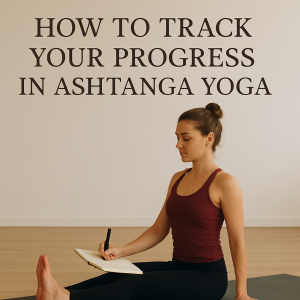
Maintain a Yoga Journal
Keeping a journal may seem simple, but it’s one of the most powerful ways to reflect on your practice. Each day on the mat reveals something new-your breath, your balance, or even your mood.
What to Write in Your Journal
-
The exact sequence you practiced (Primary, Intermediate, or Advanced).
-
Postures that challenged you (like Marichyasana D, Kurmasana, or Supta Konasana).
-
Moments of breakthrough-a deeper stretch, a stronger core, or a calmer mind.
-
Emotional and mental shifts before and after practice.
“Your journal becomes a mirror, reflecting your silent evolution.”
If you’re ready to deepen your journey with expert guidance, explore the services on the official Yoga with Sandy website: Yoga with Sandy Services
Monitor Physical Strength and Flexibility
One of the most noticeable improvements in Ashtanga Yoga is how your body adapts over time. As you progress, strength and flexibility expand naturally.
Physical Metrics to Track
-
Strength: Can you hold Chaturanga Dandasana longer and steadier?
-
Flexibility: Does Padangusthasana feel more spacious? Has your forward fold in Paschimottanasana improved?
-
Balance: Can you stay in Utthita Hasta Padangusthasana without wobbling?
Tracking these subtle shifts gives you a tangible sense of growth. For a visual boost of inspiration, visit the gallery: Ashtanga Yoga Gallery
And if you’re consistently searching for Ashtanga yoga classes near me, remember that consistency in the right environment accelerates improvement.
Notice Your Breath Control (Pranayama Progress)
Breath is the backbone of Ashtanga Yoga-the anchor that holds your practice steady. Without breath awareness, movement becomes mechanical. With it, practice becomes meditation in motion.
Signs of Improved Breath Control
-
You can maintain steady Ujjayi breathing throughout the entire vinyasa flow.
-
Your breath becomes longer, smoother, and quieter.
-
You feel more grounded even during intense sequences like jump-throughs or backbends.
“Once the breath flows freely, the mind follows.”
To learn how breathwork shapes your practice, explore more about us: About Yoga with Sandy
Evaluate Mental and Emotional Well-Being
Ashtanga Yoga goes far beyond flexibility and strength. At its core, it is a spiritual discipline designed to calm the mind and purify emotions.
Mental & Emotional Indicators of Progress
-
You feel lighter, calmer, and more centered after practice.
-
Stress levels decrease noticeably.
-
You react less and respond more-both on and off the mat.
-
Your focus sharpens, helping you stay present during challenging transitions.
“Yoga begins in the mind long before it shows in the body.”
Discover more mental and spiritual insights here: Yoga Blogs
Attend Workshops or Seek Feedback from Teachers
Even the most dedicated home practitioner benefits from an experienced teacher’s perspective. Small alignment cues can transform your entire posture and prevent injury.
What Teachers Can Help You Track
-
Posture alignment and corrections
-
Breath-to-movement synchronization
-
Transitions between poses
-
Advancements into new postures safely
If you’ve been searching for Ashtanga yoga classes near me, you’ll find that professional guidance accelerates progress and builds confidence.
For personalised feedback or class scheduling: Contact Us
Celebrate Milestones in Your Practice
Progress in Ashtanga Yoga is not linear. Some days feel smooth, others challenging. But every small achievement is worth celebrating.
Milestones to Acknowledge
-
Holding a balance pose longer than before
-
Entering a new asana you once thought impossible
-
Improving backbends like Kapotasana
-
Flowing effortlessly through Sun Salutations
Celebration fuels motivation-it’s the spark that keeps your practice alive.
Join the online yoga family and share your wins: Instagram Community
Conclusion: Embrace Your Ashtanga Yoga Journey
Let’s go back to the questions raised earlier:
How do you truly measure progress in Ashtanga Yoga?
Is it the depth of your forward fold, the length of your breath, or the peace you feel after practice?
The truth is-progress is a blend of all these experiences.
Tracking your growth through journaling, body awareness, breath control, emotional clarity, and expert guidance will help you appreciate your journey deeply. And if you’ve been looking for Ashtanga yoga classes near me, this is your gentle reminder that the right teacher and community can elevate your practice beautifully.
“Ashtanga is not about perfection-it’s about the evolution of your entire being.”
Start your journey, deepen your practice, or explore new possibilities with Yoga with Sandy: Visit the Official Website
Your transformation begins with one breath.
How to Track Your Progress in Ashtanga Yoga: A Practical Guide for Every Yogi?
Have you ever wondered why some yogis seem to evolve effortlessly in their practice while others feel stuck? What separates consistent progress from stagnation? And more importantly-how can you truly measure your growth on the mat, beyond perfecting a posture?
“Ashtanga Yoga is not about touching your toes; it’s about what you learn on the way down.”
In this article, we explore how to track your progress in Ashtanga Yoga-not just physically, but mentally, emotionally, and energetically. Whether you’re a beginner or a seasoned practitioner, these mindful strategies will help you observe your growth and stay inspired on your journey. If you’ve ever searched for Ashtanga yoga classes near me, this guide will help you get the most out of every session.
Maintain a Yoga Journal
Keeping a journal may seem simple, but it’s one of the most powerful ways to reflect on your practice. Each day on the mat reveals something new-your breath, your balance, or even your mood.
What to Write in Your Journal
-
The exact sequence you practiced (Primary, Intermediate, or Advanced).
-
Postures that challenged you (like Marichyasana D, Kurmasana, or Supta Konasana).
-
Moments of breakthrough-a deeper stretch, a stronger core, or a calmer mind.
-
Emotional and mental shifts before and after practice.
“Your journal becomes a mirror, reflecting your silent evolution.”
If you’re ready to deepen your journey with expert guidance, explore the services on the official Yoga with Sandy website: Yoga with Sandy Services
Monitor Physical Strength and Flexibility
One of the most noticeable improvements in Ashtanga Yoga is how your body adapts over time. As you progress, strength and flexibility expand naturally.
Physical Metrics to Track
-
Strength: Can you hold Chaturanga Dandasana longer and steadier?
-
Flexibility: Does Padangusthasana feel more spacious? Has your forward fold in Paschimottanasana improved?
-
Balance: Can you stay in Utthita Hasta Padangusthasana without wobbling?
Tracking these subtle shifts gives you a tangible sense of growth. For a visual boost of inspiration, visit the gallery: Ashtanga Yoga Gallery
And if you’re consistently searching for Ashtanga yoga classes near me, remember that consistency in the right environment accelerates improvement.
Notice Your Breath Control (Pranayama Progress)
Breath is the backbone of Ashtanga Yoga-the anchor that holds your practice steady. Without breath awareness, movement becomes mechanical. With it, practice becomes meditation in motion.
Signs of Improved Breath Control
-
You can maintain steady Ujjayi breathing throughout the entire vinyasa flow.
-
Your breath becomes longer, smoother, and quieter.
-
You feel more grounded even during intense sequences like jump-throughs or backbends.
“Once the breath flows freely, the mind follows.”
To learn how breathwork shapes your practice, explore more about us: About Yoga with Sandy
Evaluate Mental and Emotional Well-Being
Ashtanga Yoga goes far beyond flexibility and strength. At its core, it is a spiritual discipline designed to calm the mind and purify emotions.
Mental & Emotional Indicators of Progress
-
You feel lighter, calmer, and more centered after practice.
-
Stress levels decrease noticeably.
-
You react less and respond more-both on and off the mat.
-
Your focus sharpens, helping you stay present during challenging transitions.
“Yoga begins in the mind long before it shows in the body.”
Discover more mental and spiritual insights here: Yoga Blogs
Attend Workshops or Seek Feedback from Teachers
Even the most dedicated home practitioner benefits from an experienced teacher’s perspective. Small alignment cues can transform your entire posture and prevent injury.
What Teachers Can Help You Track
-
Posture alignment and corrections
-
Breath-to-movement synchronization
-
Transitions between poses
-
Advancements into new postures safely
If you’ve been searching for Ashtanga yoga classes near me, you’ll find that professional guidance accelerates progress and builds confidence.
For personalised feedback or class scheduling: Contact Us
Celebrate Milestones in Your Practice
Progress in Ashtanga Yoga is not linear. Some days feel smooth, others challenging. But every small achievement is worth celebrating.
Milestones to Acknowledge
-
Holding a balance pose longer than before
-
Entering a new asana you once thought impossible
-
Improving backbends like Kapotasana
-
Flowing effortlessly through Sun Salutations
Celebration fuels motivation-it’s the spark that keeps your practice alive.
Join the online yoga family and share your wins: Instagram Community
Conclusion: Embrace Your Ashtanga Yoga Journey
Let’s go back to the questions raised earlier:
How do you truly measure progress in Ashtanga Yoga?
Is it the depth of your forward fold, the length of your breath, or the peace you feel after practice?
The truth is-progress is a blend of all these experiences.
Tracking your growth through journaling, body awareness, breath control, emotional clarity, and expert guidance will help you appreciate your journey deeply. And if you’ve been looking for Ashtanga yoga classes near me, this is your gentle reminder that the right teacher and community can elevate your practice beautifully.
“Ashtanga is not about perfection-it’s about the evolution of your entire being.”
Start your journey, deepen your practice, or explore new possibilities with Yoga with Sandy: Visit the Official Website
Your transformation begins with one breath.
FAQ Section
1. What is the Ashtanga yoga journey?
The Ashtanga yoga journey refers to the personal process of developing strength, flexibility, discipline, and mindfulness through consistent Ashtanga yoga practice. It involves physical postures, controlled breathing, and mental focus.
2. How long does it take to see progress in Ashtanga yoga?
Most beginners notice small improvements in flexibility and strength within 4 to 8 weeks of regular practice. However, the full Ashtanga yoga journey is continuous and evolves over time with dedication.
3. What is the best way to track progress in Ashtanga yoga?
Keeping a yoga journal, observing improvements in flexibility and strength, monitoring breathing patterns, and reflecting on mental calmness are effective ways to track progress in your Ashtanga yoga journey.
4. Is Ashtanga yoga suitable for beginners?
Yes, beginners can start their Ashtanga yoga journey with modified postures and guidance from experienced instructors. Gradual progression helps build strength and flexibility safely.
5. How often should I practice Ashtanga yoga?
Traditionally, practitioners follow a 5 to 6 day practice schedule per week. However, beginners can start with 3 sessions weekly and gradually increase as their body adapts.
6. Why is breathing important in the Ashtanga yoga journey?
Breathing techniques such as Ujjayi breathing help maintain rhythm, improve concentration, and connect movement with breath. Proper breathing supports both physical and mental progress in Ashtanga yoga.
