Have you ever reached the end of your workday only to realize your shoulders feel stiff, your neck aches, and your back seems permanently curved toward your laptop? You’re not alone. Millions of office workers spend eight to ten hours sitting in front of computers every day, and this modern lifestyle is quietly reshaping the body’s natural alignment. Poor posture isn’t simply a cosmetic concern—it affects breathing, energy levels, spinal health, concentration, and even confidence. Recent workplace wellness studies published in 2025 have shown that regular yoga sessions significantly reduce musculoskeletal discomfort while improving flexibility, mobility, and mental well-being among desk workers.
The good news is that your posture isn’t permanently damaged. The human body is remarkably adaptable, and with the right movement patterns, muscles can regain their strength while tight areas gradually release. That’s exactly where yoga stands apart from ordinary stretching. Rather than focusing on a single muscle group, yoga restores balance throughout the entire body, helping you stand taller, breathe deeper, and move more comfortably. Whether you’re working from home or spending long hours in the office, practicing yoga consistently can reverse years of poor sitting habits.
If you’re searching for a yoga class near you, a professional yoga studio, or an experienced yoga teacher, this guide will walk you through the best yoga practices for correcting desk-job posture while explaining why structured instruction from a certified yoga teacher can accelerate your results.
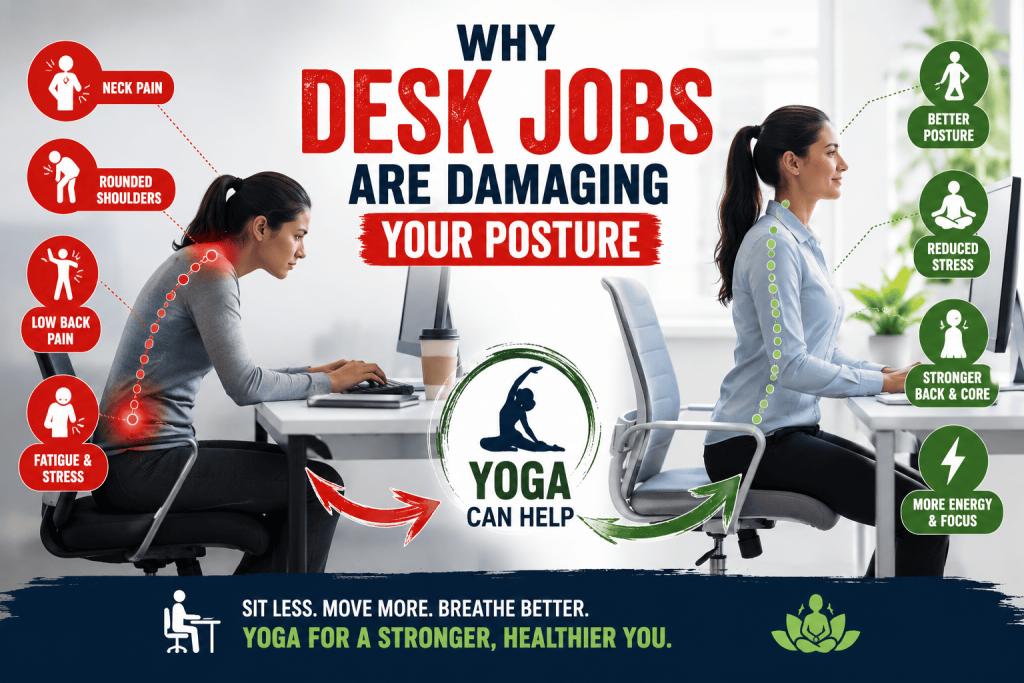
Why Desk Jobs Are Damaging Your Posture
Modern workplaces were designed for productivity, not movement. Most people spend their day leaning toward computer screens, typing on keyboards, and rarely changing positions for hours. While this may seem harmless initially, the body gradually adapts to these repetitive positions. The chest muscles tighten, the upper back weakens, the hips become less mobile, and the neck extends forward to compensate for poor screen positioning. Before long, what begins as occasional stiffness develops into chronic discomfort and visible postural changes.
Poor posture doesn’t happen overnight. It develops slowly as muscles lose their natural balance. The deep core muscles that stabilize your spine become inactive, while stronger muscles compensate in unhealthy ways. This imbalance places additional stress on your cervical spine, shoulders, and lower back. Over time, simple activities like lifting groceries, climbing stairs, or even standing for extended periods become more exhausting because your muscles are working inefficiently.
Recent workplace wellness research has found that incorporating short yoga sessions throughout the workweek significantly improves posture, reduces muscle tension, and decreases work-related stress. Unlike temporary fixes such as posture braces, yoga teaches your body to naturally maintain proper alignment through improved awareness and muscular strength. This makes it one of the most sustainable long-term solutions for office workers.
The Science Behind “Tech Neck” and Rounded Shoulders
One of the most common postural problems today is Tech Neck, a condition caused by constantly looking downward at laptops, phones, and tablets. When your head shifts just a few centimeters forward, the weight experienced by your neck muscles increases dramatically. Instead of supporting a comfortable five-kilogram head, your cervical spine may effectively bear more than double that load. Imagine carrying a heavy backpack around your neck all day—that’s essentially what your muscles experience during prolonged desk work.
Rounded shoulders often accompany Tech Neck because the chest muscles shorten while the upper back muscles weaken. This muscular imbalance affects more than appearance. It reduces lung capacity, limits shoulder mobility, causes tension headaches, and even contributes to fatigue because breathing becomes less efficient. Many people don’t realize that shallow breathing caused by poor posture can reduce oxygen delivery throughout the body, making concentration and productivity more difficult.
Yoga addresses these problems holistically. Standing poses improve spinal alignment, backbends open the chest, twists restore mobility, and breathing exercises retrain proper diaphragm function. Together, these elements create lasting improvements rather than temporary symptom relief.
Warning Signs You Should Never Ignore
Your body often provides subtle warning signals long before serious posture problems develop. Recognizing these symptoms early allows you to correct the issue before it progresses into chronic pain. Many office workers mistakenly believe these discomforts are simply part of getting older, when they’re actually the result of prolonged sitting and poor movement habits.
Some of the most common signs include persistent neck stiffness after work, headaches that begin near the base of the skull, tight shoulders, lower back discomfort, reduced flexibility, and frequent fatigue despite getting adequate sleep. You may also notice that your shoulders naturally round forward when standing or that your head protrudes ahead of your chest in photographs. These are clear indicators that your posture requires attention.
Ignoring these symptoms can eventually contribute to spinal degeneration, recurring muscle strain, nerve compression, and reduced physical performance. The encouraging news is that yoga helps reverse many of these changes by strengthening underactive muscles while gently lengthening tight tissues. Regular practice not only improves posture but also enhances body awareness, making it easier to recognize and correct unhealthy positions throughout the day before discomfort develops.
How Yoga Naturally Corrects Poor Posture
Unlike isolated gym exercises that often focus on building strength in specific muscles, yoga approaches posture correction by treating the body as one interconnected system. Every movement, stretch, and breathing exercise works together to restore balance between strength, flexibility, stability, and coordination. This holistic approach explains why yoga has become one of the most recommended movement practices for office workers and healthcare professionals alike.
One of the biggest reasons yoga is so effective is that it targets the root cause of poor posture instead of merely relieving symptoms. Tight chest muscles are gently opened through backbends and heart-opening poses, while weak upper back muscles become stronger through standing balances and weight-bearing positions. The hips regain mobility through carefully sequenced stretches, allowing the pelvis to return to a neutral position instead of tilting excessively from prolonged sitting. At the same time, the deep core muscles that support the spine become more active, creating a stable foundation for healthy alignment throughout everyday activities.
Another important advantage is the emphasis on breathing. Poor posture often restricts the diaphragm, leading to shallow chest breathing and increased muscle tension. Yoga combines posture correction with mindful breathing techniques that expand lung capacity, relax tight muscles, and improve oxygen delivery throughout the body. As your breathing becomes deeper and more efficient, you’ll likely notice improvements in focus, stress management, and overall energy levels during your workday.
For people living in Kolkata, enrolling in Yoga With Sandy under a certified yoga teacher provides personalized guidance that ensures every posture is performed safely and effectively. Whether you’re looking for a yoga class in Kankurgachi, a yoga class near Manicktala, a yoga class near Ultadanga, or a trusted yoga class in Kolkata, learning proper alignment from an experienced yoga teacher can dramatically accelerate posture correction while reducing the risk of injury.
Strengthening Weak Muscles
One of the biggest misconceptions about poor posture is that it can be fixed simply by reminding yourself to “sit up straight.” In reality, maintaining good posture requires strong muscles that can support your spine throughout the day. When you spend hours sitting at a desk, the muscles responsible for stabilizing your shoulders, upper back, and core gradually become weaker because they are not being used effectively. Meanwhile, muscles in the chest, neck, and hip flexors become tight and overactive, pulling your body into a slouched position. This imbalance creates the familiar rounded shoulders, forward head posture, and lower back discomfort experienced by many office workers.
Yoga corrects this imbalance by activating the muscles that modern lifestyles tend to neglect. Standing poses like Mountain Pose (Tadasana) teach your body what proper alignment feels like while engaging the core, glutes, and back muscles. Warrior I and Warrior II build strength in the legs and hips, creating a stable foundation for your spine. Gentle backbends such as Cobra Pose (Bhujangasana) strengthen the upper back while opening the chest, helping reverse the rounded shoulder posture caused by prolonged computer use. Unlike isolated gym exercises, yoga trains multiple muscle groups simultaneously, improving coordination and body awareness.
As your muscles become stronger, maintaining good posture no longer feels forced or uncomfortable. Your body naturally begins to adopt healthier alignment because the supporting muscles can perform their role efficiently. This is why many office workers notice they stand taller, breathe easier, and experience less fatigue after several weeks of consistent yoga practice.
Improving Flexibility and Spinal Alignment
Poses such as Cat-Cow Stretch (Marjaryasana-Bitilasana) gently mobilize the spine, improving flexibility between each vertebra and encouraging healthier movement patterns. Downward-Facing Dog (Adho Mukha Svanasana) stretches the entire posterior chain, including the calves, hamstrings, and shoulders, while simultaneously strengthening the upper body. Child’s Pose (Balasana) provides gentle decompression for the spine, relieving tension accumulated during long hours of sitting. These movements not only improve flexibility but also increase blood circulation to muscles that have remained inactive throughout the workday.
As flexibility improves, everyday activities become easier and more comfortable. Sitting, standing, bending, and even walking require less effort because your joints move more efficiently. Combined with improved muscle strength, enhanced flexibility allows your spine to maintain its natural curves without unnecessary strain. Over time, yoga transforms posture from something you consciously think about into something your body does automatically.
Best Yoga Practices for Desk Workers
The most effective yoga routine for desk workers focuses on restoring balance rather than pushing the body into advanced postures. Consistency matters far more than complexity. Even practicing for 20 to 30 minutes a day can create noticeable improvements in posture, flexibility, and energy levels. The following yoga poses specifically target the muscle groups most affected by prolonged sitting and computer work.
Standing Yoga Poses
Standing poses build strength while teaching proper body alignment.
- Mountain Pose (Tadasasana) improves posture awareness.
- Warrior I strengthens the hips, legs, and core.
- Warrior II stabilizes the shoulders and spine.
- Triangle Pose (Trikonasana) stretches the side body and improves spinal mobility.
Seated Yoga Stretches
Seated stretches are excellent for office workers because many can be performed during work breaks.
- Seated Spinal Twist
- Neck Stretch
- Shoulder Rolls
- Eagle Arms
- Seated Cat-Cow
These exercises improve circulation while reducing stiffness in the neck, shoulders, and upper back.
Restorative Yoga Poses
Restorative poses allow the nervous system to relax while gently releasing muscle tension.
- Child’s Pose
- Cobra Pose
- Bridge Pose
- Legs-Up-The-Wall Pose
- Supported Fish Pose
These postures are particularly effective after long office hours because they counteract the forward bending posture created by desk work.
Daily Yoga Routine to Reverse Desk Job Posture
Correcting poor posture doesn’t require spending hours on a yoga mat every day. What truly makes the difference is creating a sustainable routine that fits naturally into your schedule. Think of posture correction like brushing your teeth—you don’t wait until there’s a problem to start. Small daily habits produce long-term results. A consistent yoga routine helps reset your body’s alignment before poor posture becomes deeply ingrained.
Morning Routine
Begin your day with 15–20 minutes of gentle movement to prepare your body for work.
A simple sequence could include:
- Mountain Pose
- Cat-Cow Stretch
- Downward Dog
- Cobra Pose
- Warrior I
- Warrior II
- Child’s Pose
This sequence activates the core, opens the chest, improves spinal mobility, and energizes your body before sitting at your desk.
Evening Recovery Routine
After work, focus on releasing accumulated tension.
Practice:
- Seated Forward Fold
- Supine Twist
- Bridge Pose
- Legs-Up-The-Wall
- Deep Breathing
- Yoga Nidra for relaxation
An evening practice helps the nervous system recover from prolonged sitting while preparing the body for restful sleep. Many people notice reduced stiffness the following morning after consistently following this recovery routine.
Posture Correction Comparison Table
| Problem | Common Cause | Recommended Yoga Pose | Primary Benefit |
|---|---|---|---|
| Rounded Shoulders | Tight chest muscles | Cobra Pose | Opens chest |
| Forward Head | Laptop usage | Mountain Pose | Improves alignment |
| Lower Back Pain | Weak core | Bridge Pose | Strengthens spine |
| Tight Hips | Sitting all day | Warrior I | Hip mobility |
| Neck Pain | Looking at screens | Seated Neck Stretch | Reduces tension |
| Stiff Spine | Lack of movement | Cat-Cow | Improves flexibility |
| Poor Balance | Weak stabilizers | Tree Pose | Better posture control |
Why Learning from a Certified Yoga Teacher Makes a Difference
Although online videos can introduce basic yoga poses, posture correction requires precision and individualized guidance. Every person’s body is different. Some people have tight hips, others struggle with shoulder mobility, while some experience chronic neck or lower back pain. A certified yoga teacher can assess these differences and recommend modifications that suit your body’s specific needs. This personalized approach reduces the risk of injury while ensuring each pose delivers maximum benefit.
If you’re searching for a trusted yoga class near you, Yoga With Sandy offers personalized instruction designed to help office workers overcome posture-related issues through structured yoga sessions. Whether you’re looking for a yoga class in Kankurgachi, a yoga class near Manicktala, a yoga class near Ultadanga, or a welcoming yoga class in Kolkata, you’ll receive expert guidance from a certified yoga teacher who focuses on safe alignment, flexibility, strength, and overall well-being. The supportive environment at this yoga studio makes it easier to stay committed to your wellness journey while achieving lasting improvements in posture and quality of life.
Conclusion
Poor posture caused by desk jobs has become one of the most common health challenges of modern life, but it doesn’t have to become permanent. Every hour spent sitting can be balanced with intentional movement, proper stretching, and mindful strengthening. Yoga provides a practical, sustainable solution because it addresses the root causes of poor posture rather than simply masking the symptoms. By improving muscle strength, restoring flexibility, enhancing spinal alignment, and encouraging better breathing, regular yoga practice helps your body return to its natural position.
The key is consistency rather than perfection. Even 20 to 30 minutes of yoga each day can reduce neck pain, relieve shoulder tension, improve back health, and increase overall energy levels. When practiced under the guidance of an experienced and certified yoga teacher, the benefits become even more effective because every posture is adapted to your individual needs.
If you’re ready to improve your posture naturally, reduce discomfort from long working hours, and build a healthier lifestyle, consider joining Yoga With Sandy. Whether you’re searching for a yoga class in Kolkata, a yoga class in Kankurgachi, a yoga class near Manicktala, a yoga class near Ultadanga, or simply the best yoga class near you, taking the first step today can lead to lasting improvements in your health, confidence, and overall well-being.
Frequently Asked Questions (FAQs)
1. Can yoga really fix poor posture caused by desk jobs?
Yes. Regular yoga strengthens weak muscles, stretches tight tissues, improves spinal alignment, and enhances body awareness, making it one of the most effective natural methods for correcting poor posture.
2. How often should I practice yoga to improve my posture?
Practicing yoga for 20–30 minutes at least 4–5 days per week can produce noticeable improvements within a few weeks, especially when combined with good workplace ergonomics.
3. Which yoga pose is best for rounded shoulders?
Cobra Pose, Mountain Pose, Bridge Pose, Cat-Cow Stretch, and Child’s Pose are among the most effective yoga postures for opening the chest and strengthening the upper back.
4. Is yoga suitable for beginners with chronic neck or back pain?
Yes, but it’s best to learn from a certified yoga teacher who can modify poses based on your condition and ensure proper alignment throughout your practice.
5. Where can I join a professional yoga class in Kolkata for posture correction?
If you’re looking for a trusted yoga class in Kolkata, Yoga With Sandy offers personalized sessions for beginners, professionals, and seniors. Whether you’re searching for a yoga class in Kankurgachi, a yoga class near Manicktala, a yoga class near Ultadanga, or simply a reliable yoga class near you, you’ll receive expert guidance focused on posture correction, flexibility, strength, and holistic wellness.
