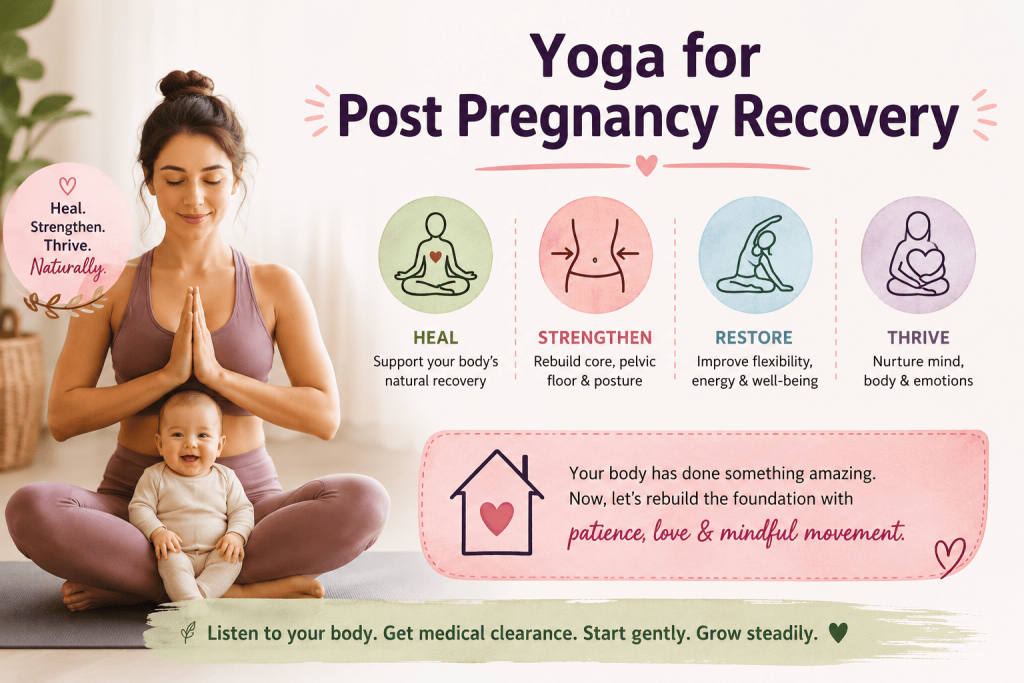
“Motherhood changes your body, but it doesn’t take away your strength. Yoga helps you rediscover it-one breath, one stretch, and one mindful movement at a time.”
Understanding Your Body After Pregnancy
Pregnancy is one of the most extraordinary experiences a woman can go through, but it also brings remarkable changes to the body. After childbirth, your muscles, joints, hormones, and even your posture begin another transformation as they gradually recover from pregnancy and delivery. Many new mothers expect their bodies to “bounce back” within a few weeks because that’s often what social media portrays. The reality is very different. Postpartum recovery is a journey, not a race, and every woman’s body heals at its own pace.
During pregnancy, the abdominal muscles stretch significantly to accommodate the growing baby. Many women also experience diastasis recti, where the abdominal muscles separate. The pelvic floor muscles, which support the bladder, uterus, and bowel, become weaker after childbirth, especially following vaginal delivery. Even mothers who undergo a cesarean section require time for the abdominal incision and deeper tissues to heal. At the same time, hormone levels fluctuate dramatically, often causing fatigue, mood swings, sleep disturbances, and emotional stress. These changes can make everyday activities such as lifting your baby, breastfeeding, or even standing for long periods feel surprisingly exhausting.
This is exactly where Yoga for Post-Pregnancy Recovery becomes valuable. Instead of pushing your body through high-impact workouts, yoga emphasizes gentle movement, mindful breathing, flexibility, posture correction, and gradual strength rebuilding. Unlike intense fitness routines, postpartum yoga respects the body’s natural healing process while improving circulation, reducing stiffness, strengthening the core safely, and calming the nervous system. Modern clinical research also supports yoga as a beneficial complementary therapy for improving postpartum mental health, reducing anxiety, enhancing quality of life, and lowering symptoms of postpartum depression.
Physical Changes After Childbirth
Every new mother experiences recovery differently, but several physical changes are common during the postpartum period. Your core muscles have lost much of their stability, your pelvic floor needs rehabilitation, and your back, neck, and shoulders often become overworked from breastfeeding and carrying your baby. Add sleep deprivation to the equation, and even simple movements may begin to feel uncomfortable. Many women also notice wrist pain, hip tightness, lower back stiffness, and poor posture within the first few months after delivery.
The hormone relaxin, which loosens ligaments during pregnancy to prepare the body for childbirth, can remain elevated for several months, especially while breastfeeding. This means joints remain more flexible and less stable than usual, increasing the risk of injury during high-impact exercise. Yoga addresses these issues by focusing on controlled movement instead of forceful stretching. Gentle poses help restore joint stability, improve muscle coordination, activate deep core muscles, and encourage better alignment without placing unnecessary strain on healing tissues. This gradual rebuilding process lays the foundation for long-term strength rather than temporary weight loss.
Emotional and Hormonal Recovery
Postpartum healing isn’t only physical. Emotional recovery deserves equal attention. Many mothers experience mood swings, anxiety, irritability, or overwhelming feelings as hormone levels shift after delivery. Combined with interrupted sleep, new responsibilities, and the pressure of caring for a newborn, emotional exhaustion can quickly accumulate. While experiencing occasional sadness or stress is common, persistent feelings of hopelessness, loss of interest, or severe anxiety should always be discussed with a healthcare professional.
Yoga offers more than movement-it provides space to breathe, reconnect with yourself, and slow down amid the demands of motherhood. Controlled breathing activates the parasympathetic nervous system, helping lower stress hormones and encouraging relaxation. Mindfulness practices reduce mental overload by bringing attention to the present moment instead of racing thoughts. Recent systematic reviews have found that yoga is a safe, acceptable, and effective complementary intervention for reducing symptoms of postpartum depression, anxiety, and stress when practiced appropriately alongside medical guidance.
Why Yoga Is One of the Best Exercises After Pregnancy
Unlike many workout programs that prioritize calorie burning or rapid weight loss, yoga begins with healing. It acknowledges that your body has accomplished something extraordinary and deserves patience rather than punishment. Postpartum yoga focuses first on restoring breathing mechanics, reconnecting the deep core muscles, strengthening the pelvic floor, improving posture, and gradually rebuilding confidence. Weight loss often becomes a natural outcome of consistent movement, but it isn’t the primary objective.
One of yoga’s greatest advantages is its adaptability. Whether you’re six weeks postpartum after a vaginal birth or several months into recovery following a cesarean section, your practice can be modified according to your doctor’s recommendations and your personal healing journey. Gentle restorative sessions may involve supported stretches, diaphragmatic breathing, pelvic floor activation, and relaxation techniques, while later stages can incorporate standing balance poses and light strength-building sequences. This progressive approach reduces the risk of injury while allowing your body to regain function at a sustainable pace.
For mothers looking for expert guidance, practicing under a Certified Yoga Teacher or an Experienced Yoga Teacher is particularly important. Proper supervision ensures poses are adjusted for postpartum needs, especially if you are recovering from a C-section, experiencing pelvic floor dysfunction, or healing from diastasis recti. At Yoga with Sandy, every session is designed to support recovery safely while helping mothers rebuild strength, improve mobility, and regain confidence in their changing bodies. Whether you’re searching for a Yoga Class in Kolkata, a Yoga Class in Kankurgachi, a Yoga Class Near Manicktala, a Yoga Class Near Ultadanga, or simply a Yoga Class Near You, choosing a professional Yoga Studio that understands postpartum recovery can make all the difference in your healing journey.
When Can You Start Yoga After Delivery?
One of the most common questions new mothers ask is, “When is it safe to start yoga after giving birth?” The answer isn’t the same for everyone because postpartum recovery depends on several factors, including the type of delivery, overall health, pregnancy complications, and how your body is healing. While it’s natural to feel eager to regain strength or lose pregnancy weight, beginning too soon can delay recovery or even cause injury. Instead of following someone else’s timeline, it’s important to listen to your body and get clearance from your healthcare provider before returning to exercise.
For most women who have had an uncomplicated vaginal delivery, gentle breathing exercises, relaxation techniques, and pelvic floor awareness may begin within the first few days after birth if recommended by a healthcare professional. Structured yoga sessions, however, usually start after the 6-week postpartum check-up, once the doctor confirms that healing is progressing well. Mothers recovering from a cesarean section generally require more time because the abdominal muscles, connective tissues, and surgical incision need adequate healing. In most cases, yoga can gradually begin after 8 to 12 weeks, depending on medical advice and individual recovery. Regardless of the timeline, the early focus should never be on flexibility or weight loss. The priority is rebuilding core stability, improving posture, restoring pelvic floor strength, and supporting emotional well-being.
Many women unknowingly compare themselves to celebrities or influencers who appear to “bounce back” within weeks. The truth is that postpartum recovery isn’t a competition. Every pregnancy, birth experience, and recovery journey is unique. Yoga embraces this philosophy by encouraging slow, mindful progress instead of unrealistic expectations. Think of your body as a house that has undergone a major renovation. Before repainting the walls, you first need to strengthen the foundation. Postpartum yoga does exactly that-it rebuilds the body’s foundation so long-term health becomes stronger than before pregnancy.
Recovery Timeline After Vaginal Delivery
Women who have experienced a normal vaginal birth often regain mobility relatively quickly, but that doesn’t necessarily mean the body has fully healed. During delivery, the pelvic floor muscles undergo significant stretching, and in some cases, tearing or an episiotomy may require additional healing time. Even if you feel physically capable of moving around within a few days, internal recovery continues for several weeks. Gentle breathing techniques, walking, and light stretching are often encouraged early because they improve circulation and reduce stiffness without placing excessive stress on healing tissues.
Once your healthcare provider confirms that recovery is progressing normally, yoga can gradually be introduced with restorative poses and breathing exercises. Early sessions should focus on reconnecting with the diaphragm, activating the deep core muscles, improving spinal mobility, and gently strengthening the pelvic floor. High-impact movements, deep backbends, strong abdominal exercises, and advanced inversions should still be avoided during the early months. As strength improves over time, your yoga practice can naturally evolve into a more dynamic routine that supports flexibility, endurance, and overall fitness while respecting your body’s pace.
Recovery Timeline After a Cesarean Section
Recovering from a cesarean birth requires additional patience because it involves major abdominal surgery. While the external incision may appear healed within a few weeks, the deeper muscles and connective tissues continue repairing themselves for several months. Many mothers feel frustrated because they want to return to exercise sooner, but respecting this healing process is essential for long-term recovery. Attempting strenuous workouts too early may increase discomfort, delay tissue repair, or contribute to core dysfunction.
Yoga becomes particularly valuable after medical clearance because it offers gentle, progressive rehabilitation rather than aggressive exercise. Initial sessions usually emphasize diaphragmatic breathing, posture correction, shoulder mobility, gentle spinal movements, and pelvic floor awareness. Over time, carefully selected poses help reactivate the abdominal muscles without placing excessive pressure on the healing incision. This gradual progression allows mothers to rebuild confidence while minimizing unnecessary strain. Working with a Certified Yoga Teacher who understands postpartum rehabilitation ensures that every pose is modified appropriately according to your recovery stage.
Top Benefits of Yoga for Post-Pregnancy Recovery
The beauty of yoga lies in its holistic approach. Instead of focusing on only one aspect of recovery, it simultaneously supports the body, mind, and emotional health. Pregnancy affects nearly every system in the body, from muscles and hormones to sleep patterns and mental well-being. Yoga addresses these interconnected challenges through mindful movement, controlled breathing, and relaxation techniques that promote complete recovery rather than quick fixes.
Scientific research published over the past few years has consistently shown that postpartum yoga contributes to improved quality of life, reduced fatigue, decreased symptoms of anxiety and depression, better sleep quality, stronger core muscles, enhanced flexibility, and greater emotional resilience. Researchers have also observed improvements in self-confidence and maternal bonding, making yoga one of the most comprehensive wellness practices available for new mothers. Rather than treating physical and emotional health as separate issues, yoga recognizes that healing happens when both are nurtured together.
Below is a comparison of how postpartum yoga benefits different aspects of recovery:
| Recovery Area | How Yoga Helps |
|---|---|
| Core Strength | Rebuilds deep abdominal muscles safely |
| Pelvic Floor | Improves muscle control and stability |
| Back Pain | Corrects posture and relieves tension |
| Stress & Anxiety | Activates relaxation response through breathing |
| Sleep | Encourages deeper relaxation and better sleep quality |
| Flexibility | Restores joint mobility gradually |
| Energy Levels | Improves circulation and reduces fatigue |
| Mental Health | Supports emotional balance and mindfulness |
| Weight Management | Increases metabolism when combined with healthy habits |
| Overall Wellness | Enhances physical and emotional recovery |
Physical Benefits of Postpartum Yoga
One of the first things many mothers notice after childbirth is that everyday movements suddenly feel different. Sitting for long periods while feeding the baby, carrying an infant, interrupted sleep, and hormonal changes all contribute to muscle stiffness and poor posture. The abdominal muscles no longer provide the same support they once did, and the lower back often compensates by working harder. This imbalance can gradually lead to chronic discomfort if left unaddressed.
Yoga gently restores balance throughout the body. Controlled movements strengthen weakened muscles while lengthening those that have become tight from repetitive daily activities. Deep breathing improves oxygen delivery to muscles, helping reduce fatigue and promote healing. Pelvic floor exercises integrated into yoga also improve bladder control and core stability, two concerns that many women experience after childbirth. Regular practice can improve flexibility, posture, circulation, joint mobility, and overall physical confidence without placing unnecessary stress on healing tissues.
Unlike traditional gym workouts that often isolate muscle groups, yoga trains the body to move as one connected system. Every posture engages multiple muscles simultaneously while emphasizing balance, coordination, and body awareness. This functional strength becomes especially valuable for new mothers who spend much of their day lifting, bending, carrying, and caring for their baby.
Mental and Emotional Benefits
Motherhood is rewarding, but it also brings significant emotional challenges. Sleep deprivation, hormonal fluctuations, changing routines, and the responsibility of caring for a newborn can leave even the most prepared mothers feeling overwhelmed. While physical recovery often receives attention, emotional healing is equally important. Yoga creates a space where mothers can reconnect with themselves beyond their daily responsibilities.
Breathing exercises, meditation, and mindfulness techniques calm the nervous system by reducing the body’s stress response. As breathing slows, the heart rate becomes more regulated, muscle tension decreases, and feelings of anxiety gradually lessen. Many mothers describe yoga sessions as the one part of their day where they can pause, breathe deeply, and simply exist without rushing from one responsibility to another.
Research published in recent years has demonstrated that yoga can significantly reduce symptoms associated with postpartum depression and anxiety while improving overall psychological well-being. Although yoga should never replace professional mental health treatment when needed, it serves as an effective complementary practice that enhances resilience and emotional recovery. Even twenty to thirty minutes of mindful movement several times a week can create noticeable improvements in mood, energy, and self-confidence over time.
Why Learning from an Experienced Teacher Matters
Postpartum yoga isn’t simply regular yoga performed more gently. The body has unique needs during this period, and certain movements that are perfectly safe for others may not be appropriate during early recovery. This is why professional guidance plays such an important role. A knowledgeable instructor understands how to modify poses for mothers recovering from vaginal birth, cesarean delivery, pelvic floor weakness, or diastasis recti.
At Yoga with Sandy, every postpartum session is designed with safety, personalization, and gradual progression in mind. Under the guidance of a Certified Yoga Teacher and an Experienced Yoga Teacher, new mothers learn proper breathing techniques, safe core activation, posture correction, and restorative movements that encourage healing instead of overexertion. Whether you’re looking for a Yoga Class in Kolkata, a Yoga Class in Kankurgachi, a welcoming Yoga Studio, a Yoga Class Near You, a Yoga Class Near Manicktala, or a Yoga Class Near Ultadanga, receiving expert instruction ensures that your recovery journey is both effective and safe.
Unlike generic online workout videos, personalized yoga classes take your medical history, recovery stage, flexibility, and comfort level into account. This individualized approach not only reduces the risk of injury but also builds confidence, making it easier to develop a consistent yoga practice that supports long-term health and wellness.
Best Yoga Poses for Post-Pregnancy Recovery
Once your doctor has given you medical clearance to begin exercising, incorporating gentle yoga into your routine can become one of the most rewarding parts of your recovery journey. The goal during the postpartum period isn’t to perform advanced poses or regain pre-pregnancy flexibility overnight. Instead, the focus should be on restoring strength, improving mobility, reconnecting with your breath, and allowing your body to heal naturally. Every pose should feel supportive rather than strenuous, and it’s perfectly acceptable to use yoga blocks, bolsters, cushions, or folded blankets to make each posture more comfortable.
Below are some of the safest and most effective yoga poses for new mothers. These postures help improve circulation, activate the core muscles gently, strengthen the pelvic floor, relieve back pain, and reduce physical and emotional stress. Practice each pose slowly, breathe deeply throughout the movement, and stop immediately if you experience pain or discomfort.
1. Cat-Cow Pose (Marjaryasana-Bitilasana)
One of the first areas that need attention after childbirth is the spine. Pregnancy often changes posture significantly as the growing baby shifts the body’s center of gravity forward. After delivery, breastfeeding, carrying the baby, and spending hours bending over can place additional strain on the neck, shoulders, and lower back. The Cat-Cow Pose is a gentle spinal movement that helps restore mobility while encouraging proper breathing and core engagement.
Begin on your hands and knees with your wrists directly beneath your shoulders and your knees aligned under your hips. As you inhale, slowly arch your back, lift your chest, and look slightly upward into Cow Pose. As you exhale, gently round your spine, draw your belly inward, and lower your head into Cat Pose. Repeat this sequence slowly for several breaths, allowing your movements to synchronize naturally with your breathing.
Practicing Cat-Cow regularly improves spinal flexibility, reduces stiffness, relieves lower back discomfort, and gently activates the deep abdominal muscles without placing excessive pressure on healing tissues. Many postpartum mothers also find that this rhythmic movement provides a calming effect, making it an excellent way to begin a yoga session.
2. Child’s Pose (Balasana)
Motherhood often leaves very little time for rest, which makes restorative poses incredibly valuable. Child’s Pose offers a moment of physical and emotional relaxation while gently stretching the back, hips, and shoulders. It is especially beneficial for mothers who spend long periods nursing or carrying their baby, as these activities frequently create tension throughout the upper body.
To practice, kneel comfortably on the mat, sit back toward your heels, and slowly lower your torso forward while extending your arms in front of you. Rest your forehead on the mat or on a folded blanket if needed. Focus on slow, deep breathing and allow your entire body to soften with each exhalation.
Beyond improving flexibility, Child’s Pose encourages relaxation by activating the parasympathetic nervous system, often referred to as the body’s “rest and digest” mode. This helps reduce stress hormones, quiet mental chatter, and create a sense of calm that many new mothers desperately need. Even spending just three to five minutes in this pose each day can make a noticeable difference in both physical comfort and emotional well-being.
3. Bridge Pose (Setu Bandhasana)
The Bridge Pose is one of the most effective yoga postures for rebuilding strength after pregnancy because it targets several key muscle groups simultaneously. It strengthens the glutes, activates the hamstrings, gently engages the core, and supports pelvic floor recovery. These muscles work together to stabilize the pelvis and lower back, helping improve posture and reduce discomfort during daily activities.
Lie comfortably on your back with your knees bent and your feet placed hip-width apart. Press your feet firmly into the floor as you slowly lift your hips toward the ceiling while keeping your shoulders relaxed. Hold the position for a few breaths before lowering your hips with control.
Unlike traditional abdominal exercises such as crunches, Bridge Pose activates the body’s stabilizing muscles without creating excessive pressure on the abdominal wall. This makes it particularly beneficial for women recovering from diastasis recti when performed correctly under professional guidance.
4. Pelvic Tilts
Although technically considered a rehabilitation exercise rather than a traditional yoga pose, pelvic tilts are commonly incorporated into postnatal yoga classes because of their remarkable effectiveness. They help reconnect the deep core muscles, improve pelvic alignment, reduce lower back pain, and strengthen the muscles that support everyday movement.
Begin by lying comfortably on your back with your knees bent. As you exhale, gently flatten your lower back against the floor by tilting your pelvis upward and engaging your abdominal muscles. Hold briefly before returning to a neutral position while inhaling. Perform the movement slowly and deliberately without forcing the range of motion.
Pelvic tilts may appear simple, but they establish the foundation for rebuilding core strength safely. Consistent practice helps improve posture, stability, and body awareness, making more advanced yoga movements easier and safer as recovery progresses.
5. Legs-Up-the-Wall Pose (Viparita Karani)
Few yoga poses feel as restorative as Legs-Up-the-Wall Pose, especially for mothers who spend long hours standing, walking, or carrying their baby. This gentle inversion encourages circulation, reduces swelling in the legs and feet, relieves fatigue, and promotes deep relaxation without requiring significant physical effort.
Sit beside a wall and carefully swing your legs upward while lowering your back onto the floor. Adjust your distance from the wall until you feel comfortable, then relax your arms by your sides and breathe naturally. Stay in the pose for five to ten minutes, allowing gravity to support your legs completely.
This posture is particularly helpful for reducing stress, calming the nervous system, and encouraging restful sleep. Since sleep quality is often disrupted during the postpartum period, incorporating restorative poses like this into your evening routine can contribute to better recovery over time.
Common Mistakes New Mothers Should Avoid
Returning to exercise after childbirth requires patience, yet many mothers unknowingly make mistakes that slow their recovery. One of the biggest errors is rushing back into intense workouts too soon. Social media often celebrates rapid postpartum transformations, creating unrealistic expectations that encourage women to push their bodies before they are fully healed. Recovery, however, isn’t measured by how quickly you lose weight but by how well your body regains strength and function.
Another common mistake is ignoring pelvic floor rehabilitation. Many women focus on abdominal exercises while overlooking the muscles that support the bladder, uterus, and bowel. Weak pelvic floor muscles can contribute to urinary leakage, lower back discomfort, and core instability if left unaddressed. Similarly, performing traditional crunches or high-impact exercises too early may worsen diastasis recti rather than improve it.
Skipping warm-ups, holding the breath during movements, practicing advanced poses without guidance, and comparing your progress with others are additional habits that should be avoided. Every postpartum recovery journey is unique. Working under the supervision of a Certified Yoga Teacher allows each session to be tailored according to your body’s specific needs rather than following a generic fitness routine.
Why Choose Yoga with Sandy for Your Postpartum Recovery?
Recovering after pregnancy requires more than simply attending a yoga class-it requires compassionate guidance, personalized attention, and an understanding of the unique challenges new mothers face. At Yoga with Sandy, we believe that every mother’s recovery journey deserves patience, encouragement, and professional support. Our classes are thoughtfully designed to help women regain confidence, rebuild strength, and improve overall well-being through safe and evidence-based yoga practices.
Led by a Certified Yoga Teacher and an Experienced Yoga Teacher, each session focuses on gentle progression rather than intensity. Whether your goal is improving posture, strengthening your core, relieving back pain, reducing stress, or simply finding a peaceful space to reconnect with yourself, every practice is adapted to your individual recovery stage. Small class sizes and personalized instruction ensure that you receive the attention needed to practice safely and effectively.
If you’re searching for a trusted Yoga Class in Kolkata, a welcoming Yoga Class in Kankurgachi, a professional Yoga Studio, a Yoga Class Near You, a Yoga Class Near Manicktala, or a Yoga Class Near Ultadanga, Yoga with Sandy provides a supportive environment where healing becomes a journey rather than a destination. Our mission is not only to help mothers recover physically but also to empower them mentally and emotionally as they embrace this beautiful new chapter of life.
Conclusion
Post-pregnancy recovery is about much more than returning to your pre-pregnancy weight or fitness level. It’s about rebuilding strength, restoring confidence, supporting emotional well-being, and allowing your body the time it deserves to heal. Yoga offers a balanced and sustainable path toward recovery by combining gentle movement, mindful breathing, flexibility, relaxation, and functional strength in a way that respects the body’s natural healing process.
Whether you’ve experienced a vaginal birth or a cesarean section, a consistent and well-guided yoga practice can help reduce pain, improve posture, strengthen the pelvic floor, rebuild core stability, and promote mental clarity. Backed by growing scientific evidence, postpartum yoga has become one of the most recommended complementary practices for enhancing overall maternal health.
If you’re ready to begin your healing journey, remember that you don’t have to do it alone. With the guidance of an Experienced Yoga Teacher at Yoga with Sandy, you’ll receive personalized support in a nurturing environment designed specifically for your needs. Join our Yoga Class in Kolkata, visit our Yoga Studio in Kankurgachi, or explore a Yoga Class Near You to take the first step toward a healthier, stronger, and more confident version of yourself.
Frequently Asked Questions (FAQs)
1. When is it safe to start yoga after pregnancy?
Most women can begin gentle yoga after receiving medical clearance, usually around six weeks after a vaginal delivery and eight to twelve weeks after a cesarean section. Always consult your healthcare provider before starting any exercise program.
2. Can yoga help with diastasis recti?
Yes. Certain yoga poses and breathing techniques can safely strengthen the deep core muscles and support recovery from diastasis recti. It’s important to practice under the supervision of a qualified instructor.
3. Is postpartum yoga safe after a C-section?
Yes, but only after your doctor confirms that your incision has healed sufficiently. A certified yoga instructor can modify poses to ensure your recovery remains safe and comfortable.
4. How often should new mothers practice yoga?
Practicing yoga two to four times a week, even for 20–30 minutes per session, can provide noticeable improvements in strength, flexibility, posture, stress management, and overall well-being.
5. Why should I choose Yoga with Sandy for post-pregnancy recovery?
Yoga with Sandy offers personalized guidance from a Certified Yoga Teacher and an Experienced Yoga Teacher in a supportive environment. Whether you’re looking for a Yoga Class in Kankurgachi, a Yoga Class in Kolkata, a Yoga Class Near Manicktala, a Yoga Class Near Ultadanga, or simply a Yoga Class Near You, our programs are thoughtfully designed to help mothers recover safely and confidently.
